President Donald Trump issued a series of increasingly fiery threats to destroy Iran’s power plants starting Tuesday and bring “Hell” to the country after US forces rescued an airman from Iran more than a day after his fighter jet was shot down.
Iran rejected Trump’s latest ultimatum to reopen the Strait of Hormuz, saying the strait would only reopen fully when damage from the war is compensated, as Tehran coinued to strike energy targets in its Gulf neighbors, including Kuwait’s oil headquarters.
Trump, in renewing his threats to target Iran’s civilian infrastructure, used an expletive in a social media post and told Axios he will be “blowing up everything over there” if Iran doesn’t make a deal. He said he plans to hold a news conference at 1 p.m. on Monday and also posted about a Tuesday 8 p.m. deadline, without offering any details about what he meant.
On March 26, Trump gave Iran a 10-day deadline to reopen Hormuz, which would expire Monday evening. His threat to bomb civilian power plants, however, could constitute a war crime under international law.
Late Saturday, US forces rescued an airman from Iran after his fighter jet was shot down on April 2 during a combat mission. Trump hailed the dramatic rescue operation, where the US deployed dozens of aircraft to retrieve the injured crew member from a mountainous area, a day after a second person from the same F-15E jet was rescued.
The mission spanned two days and involved hundreds of special operations troops, with US aircraft dropping bombs and firing on Iranian convoys to keep them away from the aviator’s hiding area, the New York Times reported.
House Intelligence Chairman Rick Crawford, an Arkansas Republican, said on Fox News’ Sunday Morning Futures that the US didn’t sustain any casualties but had to destroy “a couple” of US aircraft on the ground in Iran to avoid having them fall into enemy hands.
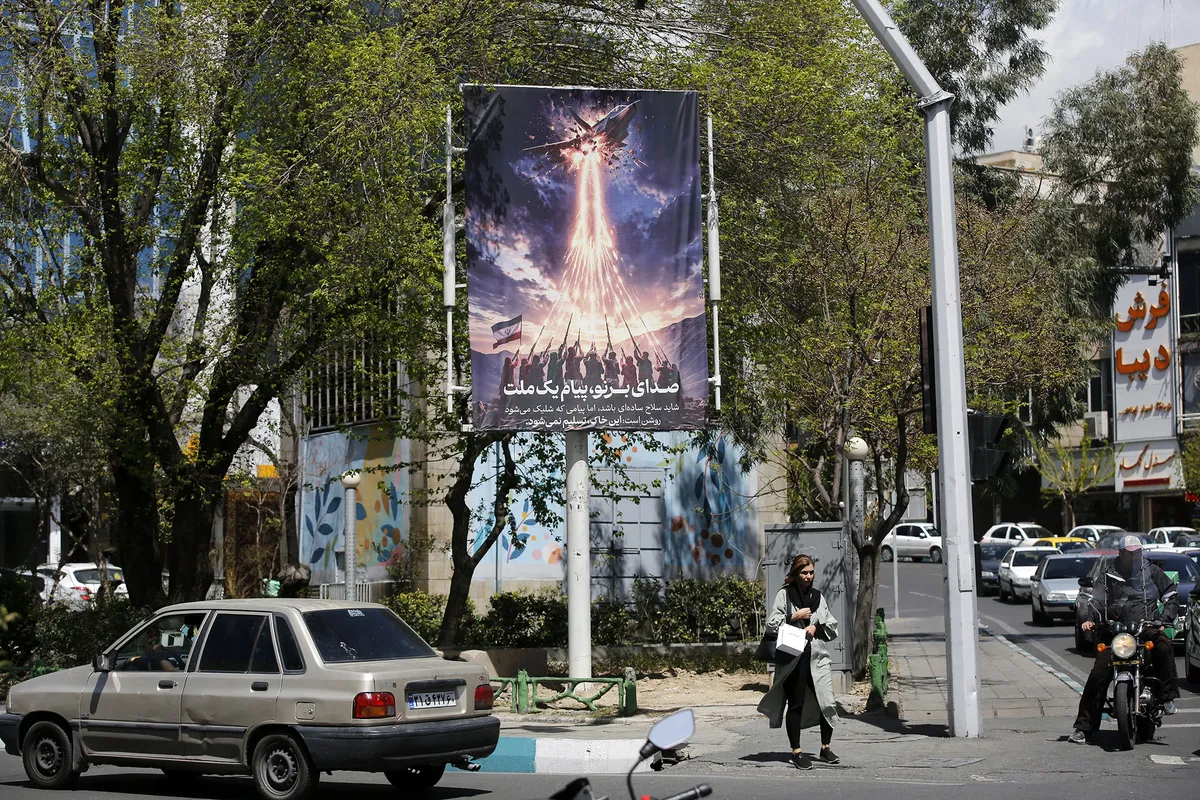
The downing of US aircraft pierced the aura of invincibility Trump has sought to project, as the war with Iran enters a second month. Iran’s attacks have brought the Strait of Hormuz — through which about a fifth of the world’s oil and liquefied natural gas normally flows — close to a standstill, lifting energy prices and rattling global markets.
Mehdi Tabatabaei, a deputy for communications and information at the Iranian president’s office, said Sunday that Tehran would reopen the Strait of Hormuz only when damages from the war are “fully compensated from a portion of its transit toll revenues.”
Fifteen ships have passed through the Strait of Hormuz with permission from Iran in the past 24 hours, semi-official Fars news agency reported, which it said is still about 90% lower than before the start of the conflict.
Oil prices have been roiled by the conflict and soaring costs for products such as jet fuel and diesel are threatening a renewed wave of inflation. OPEC+ members raised their production quotas for May in a symbolic move as the war constrains production and shipments from several of the alliance’s largest members. Oil gained in early trading Monday Asia.
In the US, average national retail gasoline prices have topped $4 a gallon for the first time since 2022. Crossing that critical psychological threshold brings some political risk to the Trump administration and Republicans as consumers grow increasingly concerned over the cost of living in the months ahead of November’s midterms.





Comments (0)
Leave a Comment